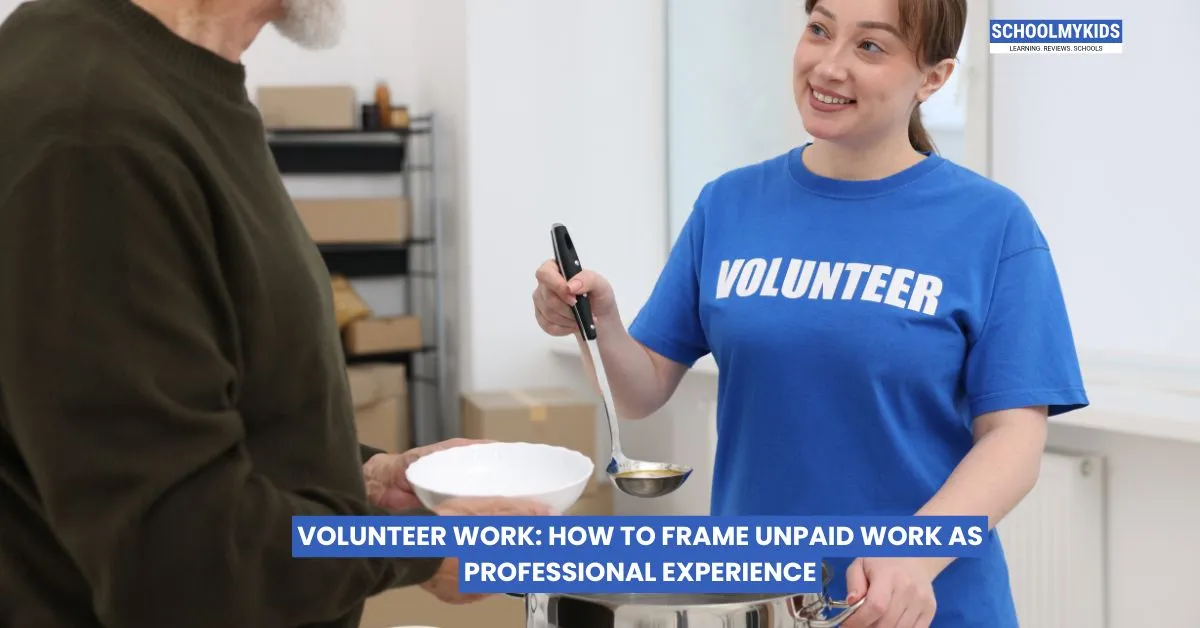
Why Students Think Volunteer Work “Doesn’t Count”
Many students hesitate to mention volunteer work in applications or interviews. The reasoning is predictable: no salary, no title, no official structure. It feels informal. Almost like it doesn’t belong next to internships or jobs.
That belief is wrong and expensive.
Work does not become professional because money changed hands. It becomes professional when responsibility, skills, and outcomes are involved. Volunteer roles often have all three. Students just fail to frame them properly.
What Employers Actually Look For
Skills, Not Pay Slips
Recruiters rarely ask whether you were paid. They look for evidence of:
- Responsibility
- Initiative
- Problem-solving
- Communication
- Consistency
Volunteer work often provides stronger proof of these than entry-level paid roles, especially for students.
The mistake is describing volunteering emotionally instead of professionally.
Evidence of Trust
Being trusted with real tasks without pay often signals reliability. Organizations do not give responsibility to people who disappear or underperform, even if they are unpaid.
Trust is a professional indicator.
The Framing Problem Students Create
Describing Roles, Not Contributions
Students often write:“I volunteered at an NGO helping children.”
This tells nothing.
Professional framing focuses on actions and outcomes:
- What did you do?
- How often?
- What changed because of your work?
Without this, experience sounds vague and forgettable.
Overusing “Helped” and “Assisted”
These words weaken impact. They suggest passivity.
Instead of “helped organize,” say:
- “Planned weekly schedules for…”
- “Coordinated logistics for…”
- “Managed communication between…”
Language shapes perception.
How to Frame Volunteer Work Professionally
Define Your Role Clearly
Even informal roles can be framed with clarity:
- Volunteer Coordinator
- Content Contributor
- Outreach Lead
- Program Assistant
Titles don’t need to be inflated. They need to be accurate and understandable.
Focus on Skills Used
For each role, identify 3–4 skills:
- Communication
- Data handling
- Teaching
- Research
- Event planning
- Team coordination
Then link them to actions.
Quantify Wherever Possible
Numbers make experience real:
- “Worked with 20+ students weekly”
- “Managed 5-member volunteer team”
- “Created materials used across 3 programs”
Approximate numbers are fine if honest.
Turning Volunteer Work Into Resume Gold
Use Professional Bullet Structure
Each bullet should follow this logic: Action + Skill + Outcome
Example:
- “Designed basic learning materials for underprivileged students, improving session engagement and attendance.”
That sounds professional because it is.
Place It Strategically
Volunteer work should not be hidden at the bottom. If it is your strongest experience, place it where experience sections usually go.
Ordering signals importance.
Talking About Volunteer Work in Interviews
Drop the “Just Volunteering” Language
Never say “I was just volunteering.” That phrase destroys credibility instantly.
Say: “I worked with a nonprofit where I was responsible for…”
Confidence in framing changes how it is received.
Emphasize Learning and Responsibility
Interviewers care about what you learned and how you handled responsibility.
Talk about:
- Challenges faced
- Decisions made
- Mistakes corrected
- Feedback received
These sound professional because they are professional.
When Volunteer Work Beats Paid Internships
Real Responsibility vs Token Tasks
Some paid internships give students little more than observation. Many volunteer roles give real ownership.
Ownership builds competence faster than observation.
Long-Term Commitment Signals Reliability
Consistent volunteering over months or years shows discipline and values. That matters more than short, disconnected stints.
What Not to Do
Do Not Guilt-Frame It
Avoid language that makes volunteering sound like sacrifice or charity. Focus on work, not virtue.
Professional experience is about contribution, not moral points.
Do Not Exaggerate
Inflation is easy to spot. Keep claims grounded and defensible.
Credibility matters more than impressiveness.
A Better Way to Think About Volunteer Work
Volunteer work is not “less than” paid work. It is simply compensated differently.
When students frame unpaid work through skills, responsibility, and outcomes, it becomes legitimate professional experience.
Money validates labor.Impact validates experience.
If your work created value, solved problems, or served real needs, it belongs in your professional story.







Be the first one to comment on this story.