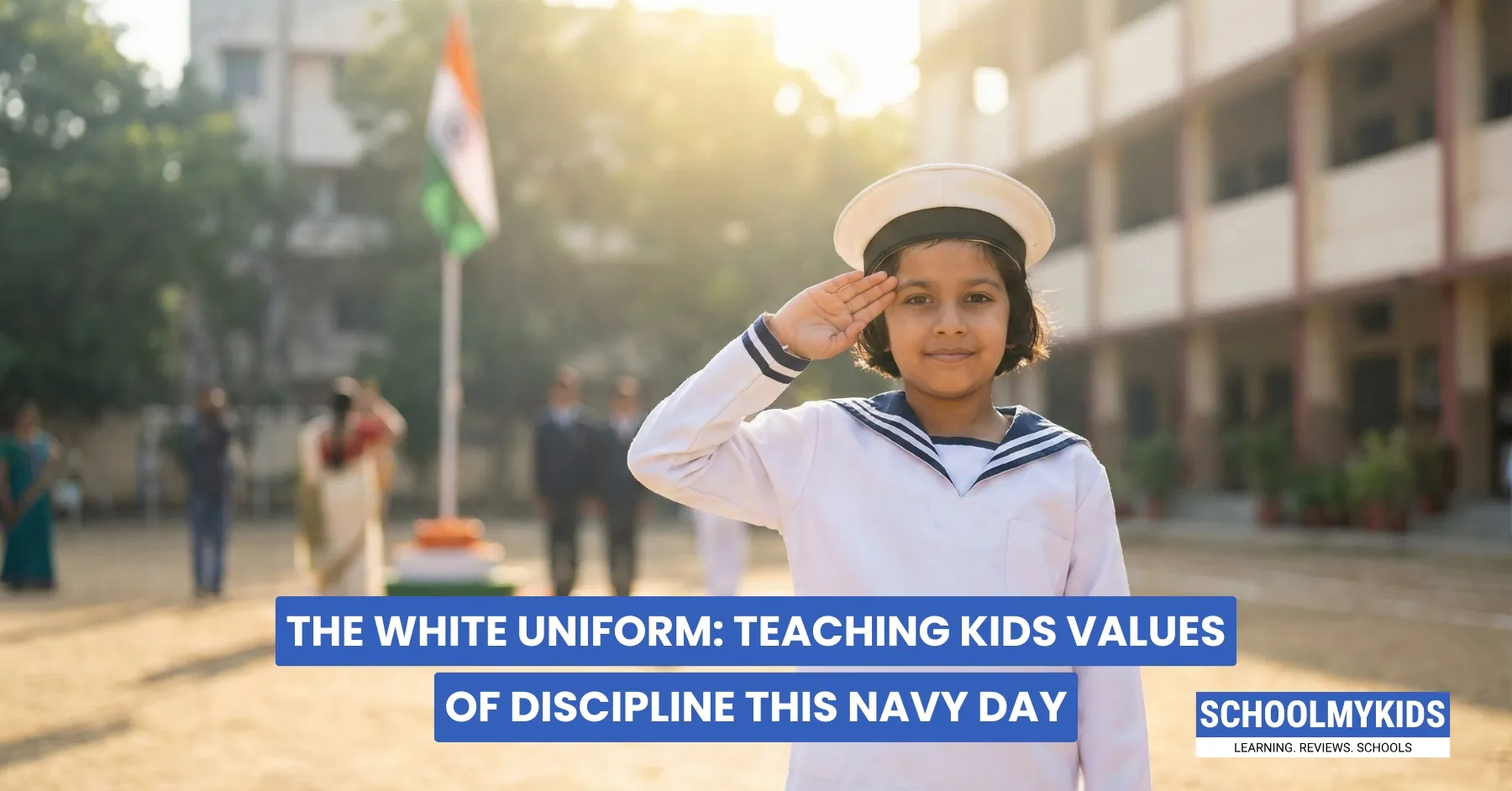
Every December 4, when your kids see those crisp white naval uniforms on TV or at the beach demonstrations, they're looking at something bigger than just a uniform. They're seeing discipline in action.
This year, on Navy Day 2025, at Shangumugham Beach in Thiruvananthapuram, President Droupadi Murmu witnessed the operational demo by the Indian Navy on December 3, 2025, showing the country what years of discipline, training, and dedication look like.
What Navy Day Actually Means (And Why Kids Should Know)
Navy Day remembers a specific night, December 4, 1971, when the Indian Navy launched Operation Trident during the Indo-Pak War. Think of it as India's maritime moment of brilliance.
Led by Commodore Kasargod Pattana Shetty Gopal Rao, the operation deployed three missile boats, INS Veer, INS Nipat, and INS Nirghat, striking Karachi's naval headquarters with precision. It wasn't luck. It was discipline, training, and teamwork.
What we want our kids to learn from is that those sailors didn't become heroes overnight. They became heroes through daily discipline, the same kind you're trying to teach at home.
The White Uniform Lesson
That spotless white uniform every naval officer wears is not just for looks. Anyone with kids knows that keeping anything white clean for five minutes is a miracle. Now imagine keeping it pristine on a ship for months. It screams discipline.
The theme for Navy Day 2025 is "Indian Navy: Combat Ready, Cohesive, Aatmanirbhar", which basically translates to being ready, working together, and being self-reliant. That's exactly what we want our kids to learn.
Teaching Discipline the Navy Way (Without the Boot Camp)
Telling kids to "be disciplined" doesn't work. Showing them what discipline looks like in action does. Navy Day gives you that perfect real-world example.
Morning Routines That Actually Stick
Naval officers start their day at the same time every day. No negotiations. No "five more minutes." Here's how to make it work at home:
- The Navy Alarm Drill: Instead of multiple snoozes, make wake-up time non-negotiable, just like sailors responding to morning alarms on ships. Start with weekends. Once kids master weekend mornings (when there's no school pressure), weekday mornings become easier.
- The Uniform Check: Naval uniforms are inspection-ready daily. Teach kids to lay out tomorrow's clothes before bed. Not picking them in the morning chaos, but actual preparation the night before. It sounds simple because it is.
The "Station Keeping" Approach to Chores
On naval ships, every sailor has their assigned station and responsibilities. Nobody else will do their job. Use Navy Day to introduce this concept:
Give each child their "station," maybe it's keeping the shoe rack organized, feeding pets, or setting the table. Not rotating chores that confuse everyone, but one clear responsibility they own.
When your child complains it's not fair, remind them: sailors don't get to skip their watch duty because they don't feel like it. The ship needs everyone to do their part.
Time-Keeping Without the Nagging
Naval operations run on precise timing. Ships can't be "fashionably late" to missions. Here's the practical part:
Use a countdown system for transitions. "We're leaving in 15 minutes" means nothing to kids. Instead: "You have time for two more games, then shoes on." Make time visible and concrete, not abstract.
The Teamwork Talk That Works
Naval vessels operate on teamwork. One person can't sail a destroyer alone. When siblings fight over who does what, frame it as "operating the household ship." The Navy doesn't run smoothly when people don't coordinate. Neither does your home. When one child leaves their school bag in the middle of the floor, someone trips, and that's not discipline. When everyone knows where things go, the "ship" runs smoothly.
Self-Reliance: The "Aatmanirbhar" Connection
Reflecting the vision of Aatmanirbhar Bharat, the demonstration featured a range of indigenously built assets representing India's growing self-reliance in defence manufacturing. The Navy builds its own ships now. Teach kids the same principle.
Let them solve their own problems first. Lost homework? Before you hunt for it, give them five minutes to search. Can't find matching socks? That's why we fold them together on Sunday.
Self-reliance isn't abandoning kids to figure everything out; it's giving them the chance to try before we swoop in. Naval officers are trained to solve problems at sea where help isn't always available. Start small at home.
When Discipline Feels Hard
Some days, your kid will push back. They'll say discipline is too hard, too boring, too unfair. That's when you pull out the Navy card.
Those sailors are away from their families for months. They sleep in compact bunks. They follow orders even when tired. And they do it to keep the coastline safe, so your child can play at the beach without worry.
The Indian Navy operates in some of the most challenging conditions on earth, from stormy seas to long deployments. If they can maintain discipline there, your child can handle homework before TV time.
Conclusion
Navy Day isn't about turning kids into mini-soldiers. It's about showing them that discipline, real discipline, is how people achieve extraordinary things.








Be the first one to comment on this story.