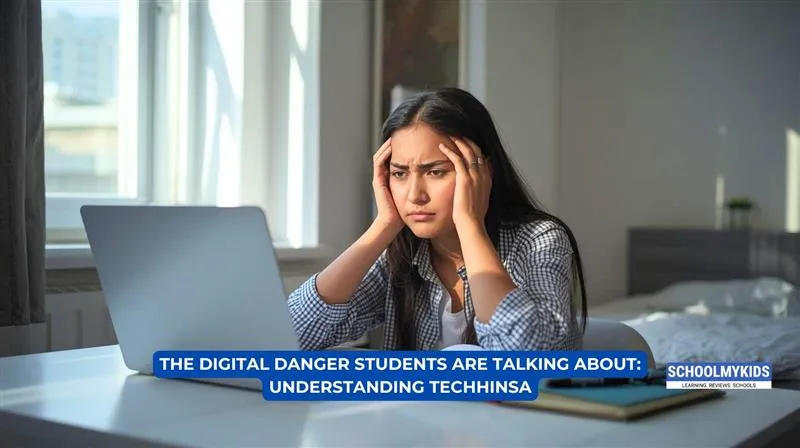
You probably use your phone every single day. To scroll, chat, study, watch reels, and maybe post something. The internet feels like a totally normal part of life. And it is. But there's something happening in those same digital spaces that a lot of students are either quietly dealing with or don't fully understand yet. It's called TechHinsa, and it's something every student needs to know about.
What Exactly Is Techhinsa?
"Hinsa" is the Hindi word for violence. "Tech" is technology. Put them together, and TechHinsa basically means using technology, i.e., your phone, the internet, apps, or social media, to harm someone. Officially, it's part of a larger term called Technology-Facilitated Gender-Based Violence, or TFGBV. According to the United Nations Population Fund (UNFPA), this refers to acts of violence that are carried out fully or partly through digital technology, and they disproportionately affect women and girls.
But let's break it down. TechHinsa can look like:
- Someone sharing your private photos without your permission
- Getting harassing or threatening messages online
- Being stalked on social media
- Someone creating a fake account pretending to be you
- Sharing your personal information publicly to embarrass or scare you
- Bullying through comments, DMs, or group chats
It doesn't always look dramatic. Sometimes it's subtle, like someone constantly tagging you in hurtful posts, or pressuring you to send pictures you're not comfortable sending. If it makes someone feel unsafe, humiliated, or controlled through technology, it counts.
Why Should Students Care?
Globally, one in three internet users is a child. In India, around 15% of active internet users are between just 5 and 11 years old. That means kids and teenagers are spending serious time online, and the risks come with that.
According to data from India's National Crime Records Bureau (NCRB), reported cybercrimes against women went up from 8,379 cases in 2019 to 14,409 cases in 2022. That's a 71% rise in just three years. And for children specifically, the numbers are even more alarming. Cybercrime cases against minors jumped from 305 in 2019 to 1,823 in 2022, which is a nearly 500% increase.
These aren't just numbers in a report. Behind each of these is a real person, a student, possibly someone your age, who went through something deeply distressing.
What's Being Done About It in Schools?
This is where some good news comes in. On Safer Internet Day, an organization called Girl Effect India launched a programme called Tipi Tipi Talk, bringing the TechHinsa conversation directly into classrooms. The initiative is being rolled out in 45 schools across Delhi and is expected to reach around 45,000 students from Classes 8 to 12.
The programme doesn't just lecture students. It uses animated films, real-life scenarios, and group discussions to make topics like online consent, privacy, and digital respect easy to understand and relate to. It's designed to feel like an actual conversation, not a textbook chapter.
What's also worth noting is how it's being run. Schools involved in the programme are setting up Digital Safety Clubs, and selected students are being trained as Digital Safety Ambassadors. These are regular students, just like you, who then guide their peers and help build a safer culture online within their school community.
This Is About Everyone, Not Just Girls
It's easy to think this issue only concerns girls, but that's not the full picture. Boys have a role to play too. Girl Effect India's Country Director Kavita Ayyagari put it simply: girls need to be taught how to protect themselves, and boys need to be empathetic and responsible. Online safety is a shared responsibility.
For girls, though, the stakes can feel especially high. The internet should be a space to learn, connect, and express yourself, and TechHinsa takes that away. When someone is afraid of being harassed online, they stop posting, stop speaking up, stop participating. That silence has real consequences.
What Can You Do Right Now?
You don't have to wait for a programme to come to your school. A few things you can start doing today:
- Know your privacy settings: Check who can see your posts, your location, and your personal information on every app you use.
- Trust your instincts: If something online makes you uncomfortable, it's okay to block, report, or walk away from it.
- Don't share what isn't yours: Before you forward a message, screenshot, or image, think about whether the person in it would be okay with that.
- Speak up: If you see someone being harassed online, even if it's not happening to you, say something. To a trusted adult, a teacher, or a school counsellor. Silence lets harm continue.
- Talk about it: The fact that TechHinsa is now being discussed in schools is huge, because the first step to solving any problem is naming it.
Conclusion
The internet is genuinely a great place. But being smart about how you use it and how you treat others on it makes it better for everyone. Now that you know what TechHinsa is, you're already one step ahead.







Be the first one to comment on this story.