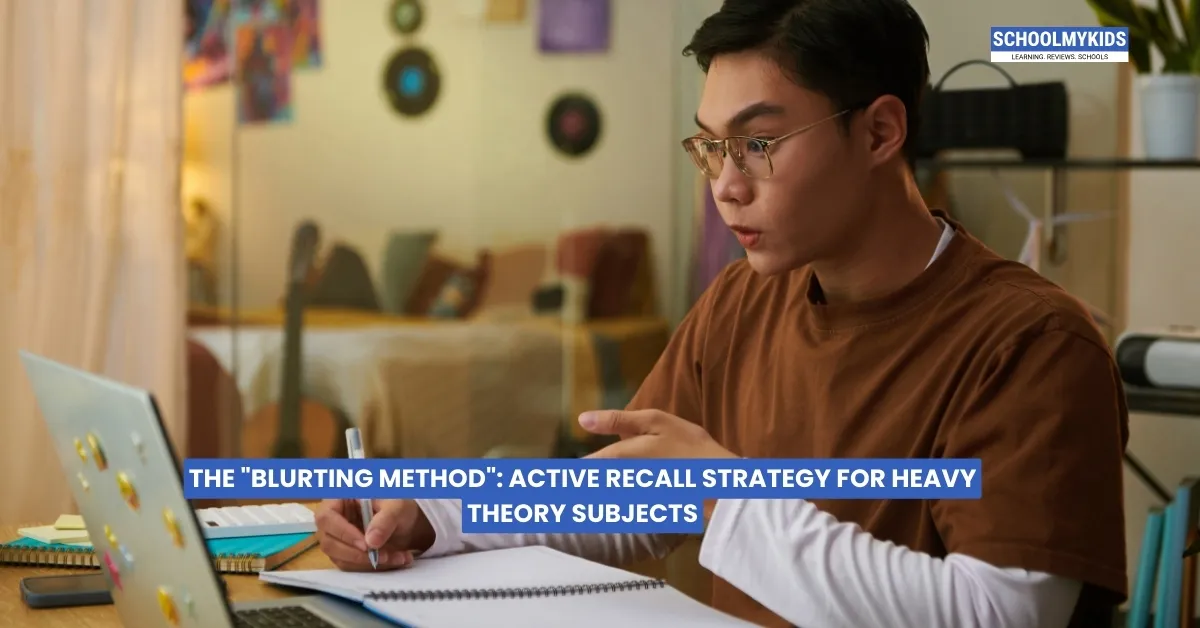
Introduction: When Reading Feels Like Studying but Isn’t
If highlighting textbooks actually worked, every student would be a topper by now. But you already know the problem. You read heavy theory subjects for hours, feel productive, close the book, and realize your brain has retained absolutely nothing. History, biology, law, philosophy, medicine, sociology. These subjects punish passive studying. This is where the Blurting Method comes in. It’s not fancy, not aesthetic, and definitely not Instagram-friendly. It’s uncomfortable. Which is exactly why it works.
What the Blurting Method Actually Is
A Simple Definition Without the Fluff
The blurting method is an active recall technique where you read a topic once, close your book, and then write down everything you remember. No checking. No peeking. No mercy. After that, you compare what you wrote with your notes or textbook, identify gaps, and repeat the process.
That’s it. No apps. No paid courses. Just your brain struggling a little, which is the whole point.
Why It’s Different From “Normal” Studying
Most students confuse familiarity with understanding. Reading the same paragraph five times makes it look familiar, but your brain hasn’t learned it. The blurting method forces retrieval. Your brain has to dig for information instead of passively recognizing words. Learning happens during that struggle.
Why the Blurting Method Works for Heavy Theory
It Attacks the Exact Problem Theory Subjects Have
Theory-heavy subjects aren’t about solving one problem. They’re about remembering frameworks, processes, definitions, causes, effects, and exceptions. Blurting exposes weak spots immediately. You don’t “feel” prepared. You see exactly what you don’t know.
That clarity is brutal but useful.
It Matches How Exams Actually Work
In exams, the book is closed. No highlights. No margin notes. You’re expected to pull information out of your head. Blurting trains the exact skill exams demand. Reading does not.
How to Use the Blurting Method Step by Step
Step 1: Read With Intention, Not Comfort
Read a small chunk. One topic, one heading, or one subtopic. Don’t rush. Don’t reread obsessively either. The goal is understanding, not memorization yet.
Step 2: Close Everything and Blurt
Close the book. Take a blank page. Write everything you remember. Keywords, diagrams, definitions, examples, messy arrows. Grammar doesn’t matter. Structure doesn’t matter. Only recall matters.
If your page looks chaotic, good. Your brain is working.
Step 3: Compare and Identify Gaps
Open your book and check what you missed, misunderstood, or oversimplified. Use a different color to add missing points. This comparison phase is where real learning locks in.
Step 4: Repeat After a Gap
Come back later. Same topic. New page. Blurt again. You’ll notice improvement fast. What was missing yesterday suddenly appears today. That’s memory forming.
Common Mistakes Students Make With Blurting
Making the Topic Too Big
Blurting an entire chapter at once is a rookie mistake. You’ll feel overwhelmed and quit. Break topics down. Smaller chunks lead to faster wins and better motivation.
Checking Notes Too Early
Peeking ruins the process. The discomfort of not knowing is necessary. If you check too soon, you’re robbing your brain of effort, and effort is what builds memory.
Treating It Like a One-Time Trick
Blurting works best when repeated. One round helps. Multiple rounds transform retention. Think cycles, not one-off sessions.
How Blurting Fits Into a Real Study Schedule
Using It With Lectures
After a lecture, don’t rewrite notes. Blurt what you remember from the lecture first. Then compare with slides or textbooks. This turns passive listening into active consolidation.
Using It During Revision
Before exams, blurting becomes powerful revision. Instead of rereading everything, you test yourself repeatedly. This saves time and exposes exactly what needs work.
Combining With Spaced Repetition
Blurting pairs well with spaced revision. Blurt today, revisit in two days, then a week later. Each session strengthens recall and reduces forgetting.
Why Blurting Feels Hard but Pays Off
It Attacks the Ego
Blurting shows you how little you know. That hurts. Many students avoid it because it damages confidence temporarily. But fake confidence from rereading collapses in exams. Blurting builds real confidence.
It Builds Exam-Ready Thinking
Over time, your brain starts organizing information better. Answers become clearer. Connections form faster. Writing speed improves. These changes sneak up on you quietly.
Conclusion: Study Less Comfortably, Learn More Deeply
The blurting method isn’t magical. It’s just honest. It shows you reality instead of comforting illusions. For heavy theory subjects, that honesty is exactly what students need. If your current study method feels easy but your results aren’t improving, that method is lying to you. Blurting doesn’t lie. It forces your brain to work, adapt, and remember. And in academics, effort applied in the right way always beats effort wasted on comfort.







Be the first one to comment on this story.