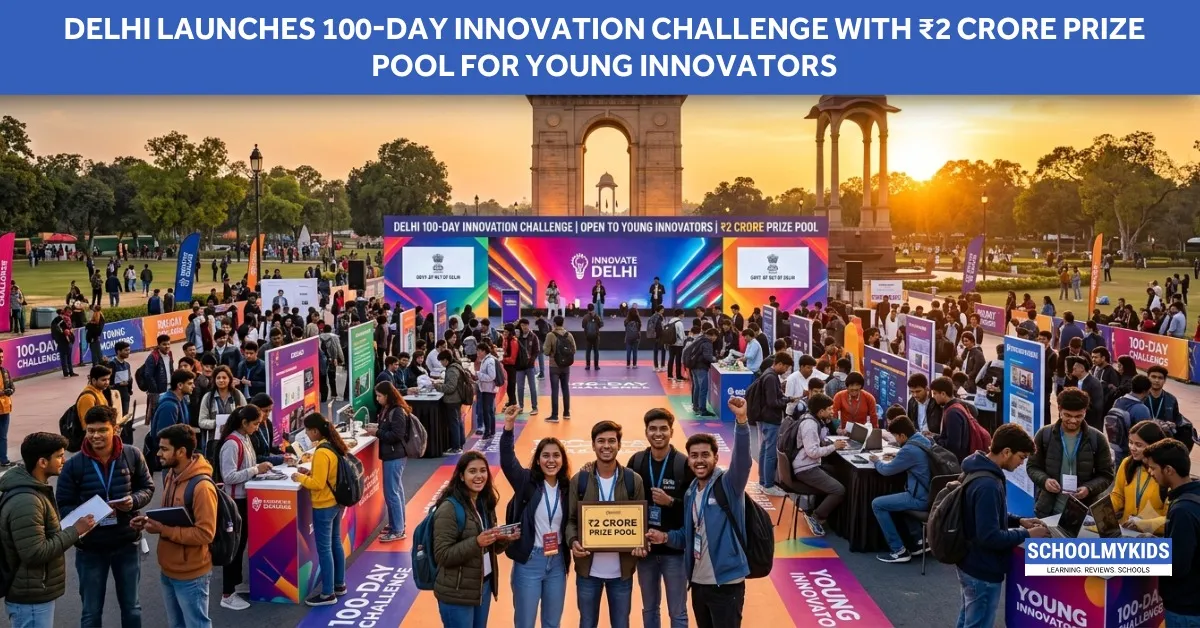
Delhi Technological University started the SEVA First Innovation Challenge on September 19, 2026. The challenge was launched by Delhi Education Minister Ashish Sood with DTU as the anchor institution. It is a national platform in themes but is open to participants from the Northern Region (Delhi, Haryana, Punjab, Jammu and Kashmir, Himachal Pradesh, Uttarakhand, Chandigarh and Ladakh).
The motto is Observe. Ideate. Innovate. Impact.
The idea is simple: you identify a real problem around you. You build a solution. You get 100 days to do it. If your solution is good enough, you win money. Up to ₹2 crore in total prize money is being distributed.
SEVA stands for Seva First, meaning “service first.” The whole thing is about solving problems that actually matter to people, not just building random tech projects.
What Problems You Can Actually Solve: Two Levels
The challenge has two tracks. National level and local community level. National-level ideas start at a higher readiness level. Local community ideas can begin from a basic concept.
National Level Problems (The Big Stuff):
Defence and space technology. Disaster management. AI and robotics. Manufacturing. Clean energy. Infrastructure. Smart mobility.
These are the huge problems India faces. You could be solving something related to aerospace, national security or how cities handle disasters.
Local Community Level (The Real Stuff):
Problems in your neighborhood. Agriculture. Education. Healthcare. Urban problems. Employment. Women’s and child safety. Transport. Energy. Tourism. Sports.
A girl in a village notices crop wastage. That’s a problem she can solve. A student in a city sees terrible traffic. That’s something they could tackle.
Most students probably fit better here. Your idea doesn’t need to be national-scale. It just needs to solve something real that you see around you.
How The Timeline Works: 100 Days Broken Down
September 19 - October 1: Ideate Phase
Problem statements released. You register your team. You figure out what problem you want to solve. You submit your initial idea. That’s about two weeks to think and plan.
Check the official portal at sewafirstryic.dtu.ac.in to register your team. Sign-in opens once problem statements are fully released.
October 2-11: Screen Phase
The judges look at all the ideas. They check if your idea is actually feasible. They eliminate the ones that are just wishful thinking. About 10 days of waiting to see if you move forward.
October 12 - November 10: Build Phase
This is the real work. You get access to maker spaces and labs. DTU mentors help you. You design your solution. You build a prototype. That’s 30 days of actual work.
The challenge also arranges expert bootcamps, laboratory or maker-space access, design reviews, and technical evaluation. You’re not just building alone. You’re getting training.
November 11-19: Test And Validate Phase
You take your prototype into the real world. Does it actually work? Can a real person use it? Does it solve the problem you said it would? About 10 days of testing in actual conditions.
November 20-26: Final Submissions And Demos
You submit your final work. You demonstrate it to the jury. They decide who wins. Final submissions use a prescribed 15-slide presentation format.
From idea to result in basically 10 weeks. That’s tight but realistic.
The result declaration date is still to be announced.
Who Can Actually Enter: Who’s Eligible
School students (Class X onwards), college students, researchers, early-stage startups, and industry or government teams. You can be a Class 10 student with an idea. You can be in second year engineering. You can be outside university. The challenge is open across the Northern Region.
Maximum team size isn’t specified on the website. But realistically, three to five people work best. Too many people, nobody knows what anyone is doing. Too few people, one person quits and the project dies.
The Mentorship Part: Why This Actually Matters
The mentors and jury include retired military officers, former ISRO scientists, IIT professors, and startup founders. These aren’t random people. These are people who’ve actually built things at scale.
You get actual mentors guiding your project. Not just at the end. During the building phase. They see your prototype. They tell you what’s wrong. You fix it. That’s the value. Real feedback from people who know.
If you’re building something and getting stuck, having someone who’s built rockets or run a startup tell you what’s wrong changes everything.
The Prize Money: What Actually Happens With It
₹2 crore total. Distributed among winners. Exact breakdown isn’t specified on the official site.
What Matters Beyond The Prize: The Real Value
You’re building something you’ll actually want to put on your resume or portfolio. Colleges look at this. Startups look at this. Employers look at this.
You get to work with mentors for feedback. That’s training money can’t buy.
You get maker space access. For students, that means free lab access. Building a prototype costs money. This makes it free.
You get connected to other innovators. The network alone is valuable.
You get recognition. If you win or even if you don’t, this was a national-theme challenge open across the Northern Region. Schools and colleges care about that.
Real Obstacles: Be Honest About Them
You need a good team. A solo project gets hard when you hit problems.
You need access to tools. Some innovations need 3D printers or electronics kits. These cost money. DTU provides maker space access, but you still might need specific tools.
You need an actual problem. “I want to build an app” isn’t a problem. “Farmers in my area lose 40% of their harvest” is a problem.
You need to finish something real. Not just an idea. An actual working prototype. That’s hard.
The 100-Day Aspect: Why It’s Actually Good
Most competitions give you months or a year. This gives you 100 days. That’s aggressive, but it forces you to focus. You don’t have time to overthink. You can’t perfect or procrastinate.
Short timelines also mean less burnout. You’re working hard for 100 days, not grinding for a year.
Key Takeaways
SEVA First Innovation Challenge launched September 19, 2026
Open across the Northern Region (Delhi plus seven neighbouring states and Union Territories)
₹2 crore prize pool for winners
National and local community problem themes
100-day timeline from ideation to final demo
Open to school students, college students, startups
Mentorship from ISRO scientists, military officers, IIT professors
Free access to maker spaces and labs
Deadline to register ideas: October 1
FAQs
Q1: Can a Class 10 student enter this challenge?
Yes. School students from Class X onwards can enter. If you’re in school and have a good idea, you can form a team and register. You might be competing against college students and startup founders, but your idea will be judged on merit, not your age. School students have won national competitions before.
Q2: What if our team doesn’t win? Is there still value in participating?
Absolutely. You’re building a real prototype. You get mentorship from experts. You get maker space access. You’re adding something genuine to your portfolio. Many employers and colleges care more about “built something real” than “won a prize.” Plus, just reaching the build phase already puts you ahead of teams that only submitted an idea.
Q3: Do we need to have the solution completely working by the demo date?
Not necessarily completely. But it needs to work enough to show it solves the problem. A working prototype that does 80% of what you intended is fine. It’s a prototype, not a finished product. The judges understand this.
Q4: What if we don’t have access to expensive equipment or maker spaces?
DTU provides maker space access. That’s free. If your idea needs specific equipment, check the maker space inventory. But also, many good innovations don’t need expensive tools. A water purification idea might just need testing materials from a school lab. A farm solution might need a basic agriculture setup. Think creatively about what you actually need versus what you think you need.
Q5: Is this open only to Delhi students?
No. It is open to the entire Northern Region: Delhi, Haryana, Punjab, Jammu and Kashmir, Himachal Pradesh, Uttarakhand, Chandigarh and Ladakh.





Be the first one to comment on this story.