Why Most Classrooms Train Students to Stay Quiet
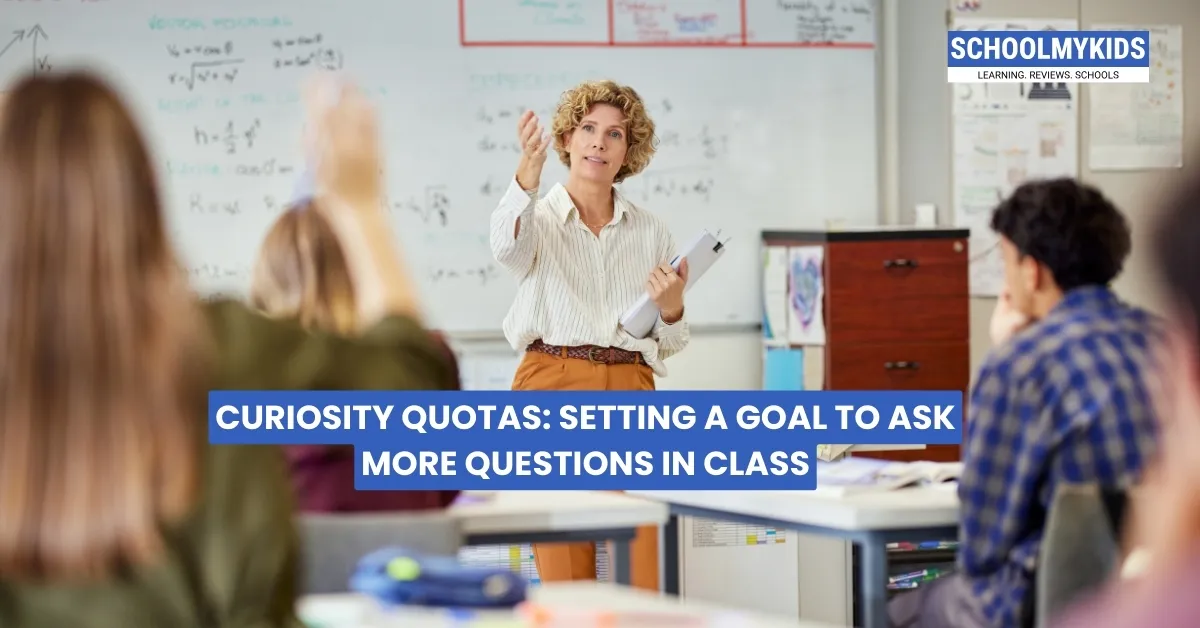
Walk into most classrooms, and you’ll notice the same pattern. The teacher explains. A few students nod. Silence follows. Questions, if any, come from the same two people every time.
This silence is not proof of understanding. It is usually proof of conditioning.
Students learn early that questions slow the class down, attract attention, and risk sounding “stupid.” Over time, curiosity gets replaced by compliance. Students stop asking not because they understand everything, but because they’ve learned that quiet equals safe.
Curiosity quotas exist to break that pattern deliberately.
What a Curiosity Quota Actually Is
A Behavioral Goal, Not a Personality Trait
A curiosity quota is a simple, intentional target for asking questions. For example:
- One genuine question per class
- Three questions per subject per week
- One clarification question per chapter
This is not about becoming outspoken or dramatic. It’s about training the brain to engage actively instead of passively absorbing information.
Curiosity is a skill. Skills improve with practice.
Quality Over Cleverness
The goal is not to ask impressive questions. It’s to ask real ones.
Questions like:
- “Why does this step work?”
- “What happens if this condition changes?”
- “How is this different from what we learned earlier?”
These questions don’t show off. They reveal thinking.
Why Asking More Questions Changes Learning
Questions Expose Understanding Gaps Early
When students don’t ask questions, confusion hides quietly. It resurfaces later during exams, when fixing it is expensive and stressful.
Questions bring confusion into the open while it’s still manageable.
Confusion addressed early saves hours of revision later.
Questions Improve Memory and Focus
Asking questions forces the brain to process information actively. This improves attention and retention.
Students who ask questions remember more, not because they are smarter, but because they engage deeper.
Passive listening fades quickly. Active inquiry sticks.
The Fear That Stops Students
“What If It’s a Dumb Question?”
Most students overestimate how much others are judging them. In reality, many classmates have the same doubt but are relieved someone asked.
The question you’re afraid to ask is often the one half the room needs answered.
“I’ll Interrupt the Flow”
Good questions improve flow. They clarify assumptions and prevent misunderstandings from piling up.
A smooth lecture that leaves students confused is not efficient. It’s deceptive.
How to Build a Curiosity Quota That Works
Start Small and Specific
Vague goals fail. “Be more curious” means nothing.
Specific goals work:
- Ask one clarification question per class
- Ask one “why” question per topic
- Ask one question connecting today’s lesson to a previous one
Small quotas reduce fear and build momentum.
Prepare Questions Before Class
Curiosity doesn’t always appear on demand. Students can note down questions while studying and bring one to class.
Prepared curiosity still counts.
This also prevents freezing up in the moment.
Write Down Questions You Didn’t Ask
Even unasked questions matter. Writing them down trains awareness and often leads to asking them later.
Curiosity starts internally before it shows externally.
What Counts as a Good Question
Clarification Questions
These prevent misunderstandings:
- “Can you explain that step again?”
- “What does this term mean in this context?”
These are signs of engagement, not weakness.
Assumption-Checking Questions
These deepen understanding:
- “Are we assuming ideal conditions here?”
- “Does this always apply or only in this case?”
These questions separate memorization from thinking.
Connection Questions
These build long-term learning:
- “How does this relate to what we learned earlier?”
- “Is this similar to that concept in another chapter?”
Connections are where understanding solidifies.
Why Teachers (Usually) Appreciate This
Good teachers want feedback. Silence gives them none.
Questions signal:
- Where students are confused
- What needs slowing down
- What ideas are landing
Classes with questions are easier to teach well, even if they feel slower.
Common Mistakes to Avoid
Turning Questions Into Mini-Speeches
Keep questions focused. Long monologues disguised as questions dilute impact.
Clarity earns better answers.
Asking Only When Completely Lost
Questions are not emergency tools. They are learning tools.
Asking early prevents getting lost in the first place.
How Parents and Schools Can Support Curiosity Quotas
- Praise thoughtful questions, not just correct answers
- Avoid shaming confusion
- Treat questioning as participation, not disruption
When curiosity is rewarded, silence stops being the default.
A Smarter Way to Think About Classroom Questions
Questions are not interruptions.They are indicators of thinking.
A student who asks more questions is not slower. They are building stronger mental models.
Setting a curiosity quota is not about becoming louder.It’s about becoming more awake during learning.
Understanding grows where questions live.Silence rarely leads anywhere useful.






Be the first one to comment on this story.