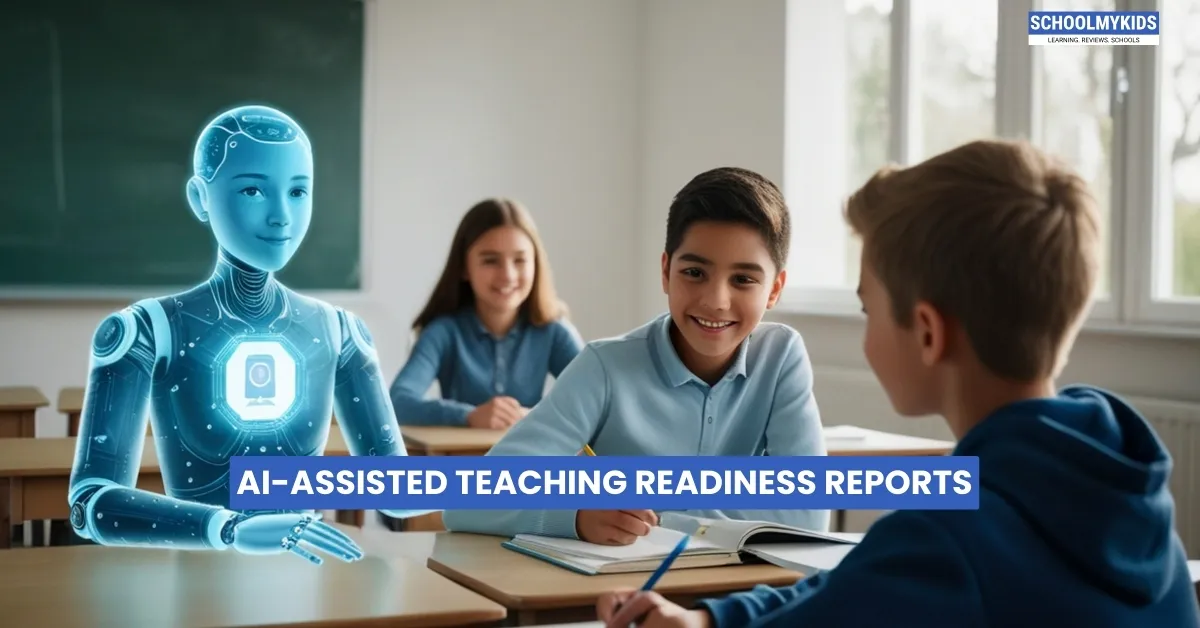
Why Schools Are Turning to AI Readiness Reports
Schools are under pressure from all sides. Parents want results. Boards want data. Teachers are expected to personalize learning, manage classrooms, track progress, and show improvement, all at once.
AI-assisted teaching readiness reports promise relief.
They claim to analyze lesson plans, student performance, engagement patterns, assessment design, and classroom pacing to tell teachers how “ready” they are to teach effectively. On paper, it sounds helpful. In practice, it depends entirely on how these reports are used.
The difference between support and stress is thin.
What Teaching Readiness Reports Actually Measure
Patterns, Not Pedagogy
AI readiness reports do not understand teaching. They recognize patterns.
They typically analyze:
- Lesson completion rates
- Assessment frequency and structure
- Student response trends
- Content coverage versus curriculum maps
This data can highlight gaps and inconsistencies, but it cannot judge empathy, classroom relationships, or real-time decision-making.
Teaching is human. AI measures proxies, not practice.
Strengths and Gaps at Scale
Used correctly, readiness reports can show where teachers may need support. For example, over-reliance on rote assessments or uneven syllabus coverage.
Used poorly, the same data becomes a ranking tool that flattens context and complexity.
Data without interpretation is dangerous.
Where AI Readiness Reports Actually Help
Early, Non-Judgmental Feedback
When reports are private and formative, they can act like mirrors. They help teachers reflect before problems grow.
This works best when:
- Reports are descriptive, not evaluative
- Trends are discussed, not scored
- Teachers control how feedback is used
Support encourages improvement. Judgment encourages compliance.
Identifying Systemic Issues
AI can reveal patterns that individual teachers cannot see alone. Overloaded syllabi, unrealistic pacing expectations, or assessment-heavy cultures show up clearly in data.
In these cases, the problem is not the teacher. It is the system.
Good readiness reports push leadership to fix structures, not blame individuals.
Where Things Go Wrong Quickly
When Readiness Becomes a Score
The moment readiness is quantified into ratings, dashboards, or comparisons, trust collapses.
Teachers start teaching to the algorithm. Creativity drops. Risk-taking disappears. Safe, predictable methods replace responsive teaching.
AI then measures compliance, not effectiveness.
Ignoring Context Completely
Readiness reports often fail to account for class size, learning diversity, language barriers, or emotional climate.
A teacher handling a difficult cohort may look “unready” on paper while doing exceptional human work.
Data without context lies confidently.
The Psychological Impact on Teachers
Silent Performance Anxiety
Unlike direct supervision, AI feedback feels constant and invisible. Teachers do not know when or how they are being evaluated.
This creates background anxiety. Not panic, but persistent tension.
Good teachers begin second-guessing instincts that once worked.
Shifting Focus From Students to Metrics
When readiness reports dominate, teachers optimize for what is measured.
Students feel the change immediately. Lessons become efficient but less alive. Engagement is replaced with coverage.
Learning becomes narrow.
What Ethical AI Readiness Should Look Like
Teacher-Controlled Feedback
Reports should belong to teachers first, not management. Teachers should decide when and how to share insights.
Ownership builds trust. Surveillance destroys it.
Qualitative + Quantitative Balance
AI data must be paired with peer discussion, classroom observation, and teacher reflection.
Numbers alone should never define readiness.
Clear Purpose and Limits
Schools must state clearly:
- What data is collected
- What it will not be used for
- Who can access it
- How long it is stored
Ambiguity breeds fear.
Preparing Teachers for AI Without Threat
Training Before Tracking
Teachers need to understand how reports work before they are subjected to them. Transparency reduces resistance.
Unknown systems feel hostile.
Framing AI as Assistant, Not Authority
AI should suggest, not decide. Highlight, not label. Support, not rank.
The moment AI replaces professional judgment, teaching loses its soul.
A More Structured Closing
AI-assisted teaching readiness reports should exist to serve teachers, not to judge them. Their value lies in helping educators notice patterns, reflect on practice, and request support before problems escalate. The moment these tools are used to rank, monitor, or standardize teaching behavior, they stop improving education and start constraining it.
True teaching readiness cannot be reduced to dashboards or scores. It lives in judgment, adaptability, and responsiveness to real students. AI should amplify these human strengths, not replace them with compliance metrics. Used with restraint and clarity, readiness reports can strengthen teaching. Used without it, they risk turning thoughtful educators into cautious operators.





Be the first one to comment on this story.