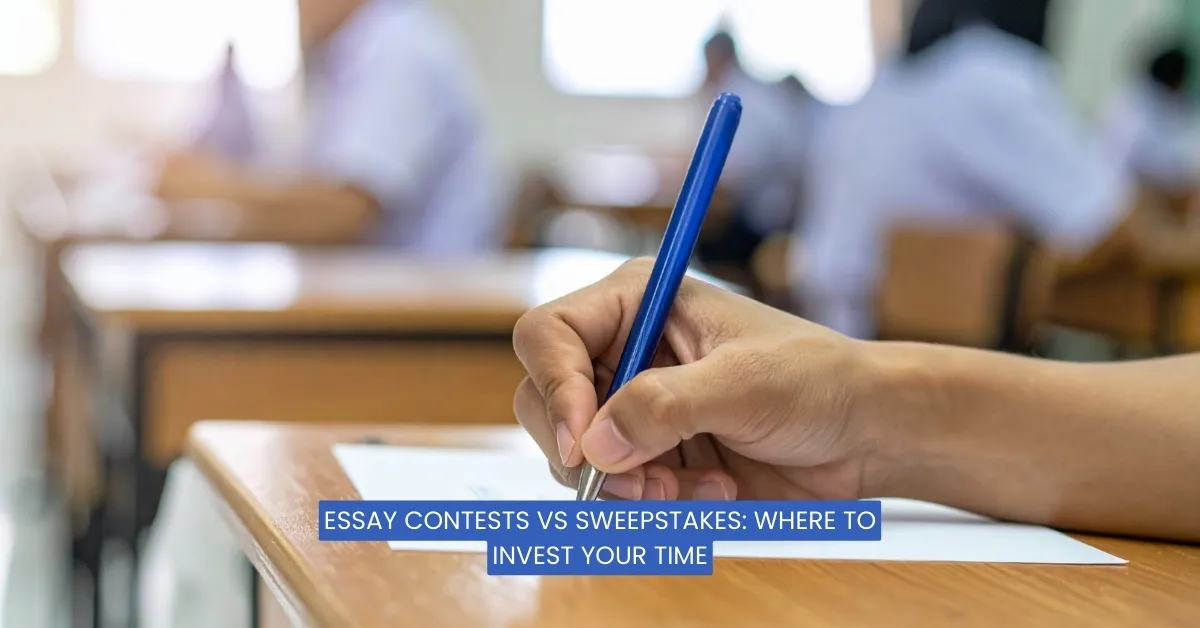
Why Students Chase Every Opportunity They See
Students are told from an early age to “build their profile.” So when an email, poster, or Instagram ad promises certificates, prizes, or recognition, many jump in without thinking twice. Essay contests, sweepstakes, quizzes, and lucky draws. Everything starts to look like an opportunity.
Time, unfortunately, is not unlimited.
The real question is not whether these opportunities are good. It is where effort actually compounds and where it quietly evaporates.
Understanding the Core Difference
What Essay Contests Really Are
Essay contests reward thinking, clarity, originality, and structure. They are competitive, selective, and effort-heavy. Results depend largely on skill and depth, not chance.
They demand time. Research. Drafting. Rewriting. Rejection tolerance.
Essay contests test what a student can do with their mind.
What Sweepstakes Actually Are
Sweepstakes are probability games. Entry is usually easy: fill a form, submit a name, maybe answer a simple question. Winners are chosen randomly or semi-randomly.
They demand almost no skill and almost no effort.
Sweepstakes test patience and luck, not ability.
The Hidden Cost Students Rarely Consider
Time Is a Finite Resource
Students often treat time as free. It is not. Every hour spent entering sweepstakes is an hour not spent building a skill.
Essay contests consume more time upfront, but that time produces transferable value: better writing, clearer thinking, stronger arguments.
Sweepstakes rarely leave behind anything once the form is submitted.
Emotional Energy Matters Too
Essay contests involve rejection. Many students avoid them because losing feels personal. Sweepstakes feel safer because failure is anonymous.
But avoiding rejection also avoids growth.
The discomfort of essay contests builds resilience. The comfort of sweepstakes builds nothing.
What Each Option Actually Builds
Essay Contests Build Assets
Even when students lose essay contests, they walk away with:
- A polished piece of writing
- Sharper thinking
- Feedback or self-awareness
- Material for portfolios and applications
One strong essay can be reused, refined, or referenced multiple times.
Effort compounds.
Sweepstakes Build Hope, Not Skill
Sweepstakes offer excitement and anticipation. Occasionally, a reward. Most of the time, silence.
They do not improve communication, thinking, or confidence. Winning feels good, but it does not make the student more capable the next time.
Hope does not compound. Skill does.
When Sweepstakes Still Make Sense
Low Effort, Low Expectation
Sweepstakes are not evil. They are fine when treated as background noise, not a strategy. If entry takes minutes and expectations are realistic, there is little harm.
The mistake is prioritizing them over meaningful work.
Motivation Boosts, Not Foundations
For younger students or those feeling burnt out, small wins from sweepstakes can provide temporary motivation. But they should never replace effort-based opportunities.
Motivation without direction fades quickly.
Why Essay Contests Feel “Not Worth It” to Many Students
Results Are Slow
Essay contests rarely give instant rewards. Recognition may come weeks or months later. This delay discourages students used to immediate outcomes.
But delayed rewards often signal deeper value.
They Expose Weaknesses
Writing an essay reveals gaps in thinking. Many students discover they struggle to explain ideas clearly. That realization hurts.
Avoiding that pain feels easier than facing it.
Unfortunately, growth lives exactly where discomfort begins.
How to Decide Where to Invest Your Time
Ask the Right Questions
Before entering anything, students should ask:
- Does this improve a skill I care about?
- Will I learn something even if I lose?
- Can the output be reused or improved?
Essay contests often answer yes. Sweepstakes rarely do.
Balance, Don’t Obsess
A healthy approach is selective participation. Choose a few essay contests aligned with interests. Put real effort into them.
If sweepstakes appear along the way, treat them as optional extras, not goals.
A Clear, Uncomfortable Conclusion
Essay contests demand effort, patience, and resilience. Sweepstakes demand luck.
One builds capability. The other builds anticipation.
Students serious about long-term growth should invest most of their time where skills increase, not where odds are random. Recognition earned slowly lasts longer than prizes won accidentally.
Time spent thinking deeply always pays dividends. Time spent hoping usually does not.

Be the first one to comment on this story.