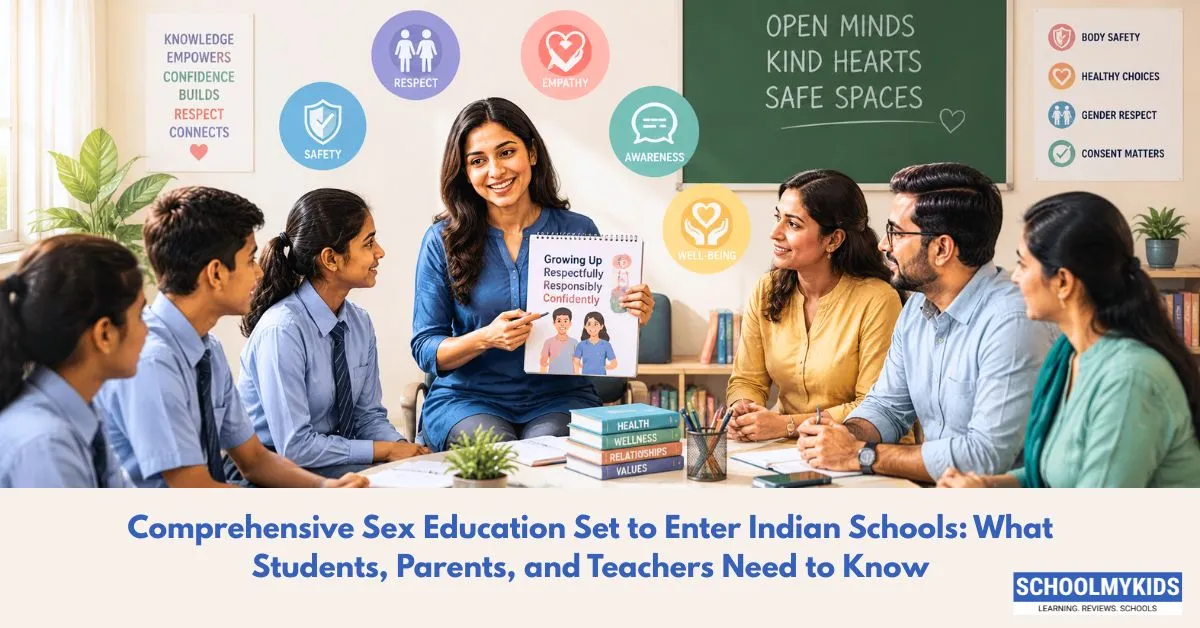
So this happened quietly in early 2026. Karnataka started rolling out structured sex education in schools for classes 8 to 12, building on earlier efforts in states like Kerala. The Supreme Court has emphasized that such education is necessary for protecting adolescents. An entire summit got organized in Delhi in April to figure out how to make this work across different states, and national discussions helped align approaches.
Most families are losing their minds about it.
The reaction’s always the same in India. Some people are thinking, finally, we need this. Others are convinced the education system is trying to ruin morality. Both sides are loud. Both sides are sure they’re right.
Let’s see what’s actually going on. Young people in this country are getting literally no information from schools about how their bodies work, what healthy relationships look like, or how to recognize when someone’s crossing a line. They’re getting information from WhatsApp forwards from random uncles, from friends who don’t know better, or from sketchy websites. That gap between what they need to know and what they actually know? That’s where problems develop.
What They’re Actually Teaching (It’s Not What You Think)
Comprehensive sex education sounds scary to most Indians. Sounds like schools are going to teach 12-year-olds about… everything explicit.
That’s not it at all.
What’s actually happening: students learn about puberty. Their bodies. Why things are changing. What’s normal. How to recognize when someone’s touching them inappropriately. What boundaries are. What consent actually means in real life, not just the word we throw around.
In secondary school, when kids are older, maybe 14, 15, the curriculum includes information about reproduction, contraception, STIs, and protection. But it’s presented factually. Not as encouragement. Not as prohibition. As information.
Think about what happens now. A teenager’s body is doing weird things. They don’t know why. They’re confused. Their friends are confused. Nobody’s explaining anything in a way that makes sense. So they make stuff up. Or they find stuff online that’s totally wrong. Or they do things without actually understanding what they’re doing or what the consequences are.
Comprehensive sex education is basically saying: here are facts. Here’s what happens. Here’s how to take care of yourself. Here’s what healthy looks like. Make informed decisions.
That’s it.
Why This Actually Started Happening
The government didn’t just wake up one day and decide to introduce sex education because they were feeling progressive.
There’s actual data.
According to the latest NFHS-6 data, about 20.1 percent of women aged 20 to 24 were married before 18, down from previous surveys but still significant, especially in rural areas. Adolescent pregnancy remains a concern, with around 7 percent of girls aged 15 to 19 having been pregnant or already mothers in earlier rounds (NFHS-6). India continues to address high rates of child marriage with notable progress but persistent challenges, particularly in certain regions. Many of them do not understand what is about to happen to their bodies or their lives. Adolescent pregnancy rates are high. Sexual violence against young women is widespread. These are not small problems.
Kerala ran sexuality education programs for years. They had numbers. Kids who got the education? Better health outcomes. More awareness about consent. Lower rates of sexual violence. (Project X and similar programs showed strong gains in awareness of consent and POCSO protections). The same fearmongers who said it would create chaos? Turned out to be wrong.
Then Karnataka decided to do this too. And the Supreme Court has stressed the importance of age-appropriate sexuality education for child protection, shifting the conversation from ‘Is this culturally appropriate?’ to ‘Is this legally necessary?’ That is huge.
The states that haven’t implemented it yet are going to feel pressure now. Because the court said so.
What Actually Happens in These Classrooms
A trained teacher (and this is important, they need training) explains how reproductive systems work. Not with embarrassment or weird jokes. Just facts. Like explaining photosynthesis, except it’s about humans.
Students ask questions. Some questions are serious. Some are awkward. All of them are normal. A good teacher doesn’t shame anyone for asking.
Then the curriculum moves to relationships. What does healthy look like? What’s not okay? How to recognize abuse before it happens? How to say no? How to ask for consent? These conversations probably never happened in their home. So the school is literally teaching something crucial.
By the time kids are 15, 16, they learn about contraception and protection. Because teenagers have sex. They do. Pretending they don’t doesn’t stop them. Teaching them how to do it safely and responsibly does.
That’s the model working in Kerala and now Karnataka.
What Parents Are Freaking Out About
Parents call this corrupting morality. The fear is that knowing about sex makes teenagers want to have sex.
Except that’s completely backwards. Countries with comprehensive sex education in secondary schools? They don’t have more teenage pregnancies. They have fewer. They have lower STI rates. Lower rates of sexual violence (UNESCO and UNFPA global reviews). Somehow, knowledge doesn’t make people rebel. Ignorance does.
Some parents say their kids are too young. Fair point if we’re talking about primary school. Secondary school though? 13, 14, 15 year olds? Their bodies are already changing. Their peers are already experimenting. Their questions are already there. Answering those questions with facts instead of shame is not corrupting them. It’s protecting them.
Then there’s the “this is Western culture” argument. But Kerala developed its own program. It’s adapted for the Indian context. It’s not like Americans designed it and India just translated it. And honestly? Sexual violence is not unique to the West. The need for this education is universal.
Some parents genuinely believe they should teach everything at home. Which is ideal. But most Indian parents are uncomfortable with these conversations. They don’t know how to explain it. They were never taught properly themselves. Schools providing this information complements what parents do at home. It doesn’t replace it.
Teachers Are Stressed Too
Nobody wants to be the teacher teaching sex education for the first time. You’ve got your own discomfort from how you were raised. You didn’t get this training in your education degree. And you know some parent is going to call the school complaining.
States rolling this out are supposed to provide teacher training. Some are doing it well. Some are not. A trained teacher can handle this professionally. They know how to answer difficult questions without getting weird about it. They know what to do if a student discloses abuse. They know how to keep the classroom respectful.
An untrained teacher? That’s going to be awkward and potentially ineffective.
This is why the summit in Delhi in April 2026 was important. It brought together teachers, administrators, and officials to figure out what training actually needs to happen. Because half-implementing this without proper preparation is worse than not doing it at all.
The Real Controversy (Why People Actually Oppose This)
Some opposition is religious or traditional. That’s sincere. People genuinely believe sex should be confined to marriage and that teenagers shouldn’t have knowledge that might challenge that. That belief system is real, even if the data doesn’t support it.
But some opposition is about control. If teenagers know about consent and healthy boundaries, they’re less likely to accept being controlled or manipulated. If they understand protection, they have autonomy over their own bodies. That threatens power structures that depend on that lack of autonomy.
Some opposition is just fear of change. Sex was never discussed. Now it will be. That feels wrong because it’s different.
None of these reasons mean the education is harmful. They mean there’s cultural work to do.
Key Takeaways
Comprehensive sexuality education is happening in multiple Indian states as of 2026. This isn’t a maybe. It’s happening.
The curriculum covers factual information about bodies, relationships, consent, and health. Not encouragement to have sex. Just facts.
Research from countries using CSE shows better health outcomes, lower pregnancy rates, lower STI rates, and less sexual violence (UNESCO and UNFPA global reviews). The fear that it causes harm is unfounded.
Students benefit enormously from knowing their bodies, understanding what consent means, recognizing abuse, and making informed decisions.
Teachers need training. A trained teacher can handle this professionally. An untrained teacher will struggle.
Parents staying involved and informed matters. Schools teaching this doesn’t mean parents opt out of these conversations.
Implementation varies by state, with teacher training and parental involvement being critical for success.
What People Keep Asking About This
Will this make teenagers want to have sex?
No. Countries with comprehensive sex education don’t have more teenage sex. They have fewer teenage pregnancies and fewer STIs. Knowledge reduces risk-taking, not increases it (UNESCO and UNFPA global reviews).
What if the school teaches things that go against my family values?
Schools teach facts. “Reproduction happens this way” is a fact. “Healthy relationships involve consent” is a fact supported by research. Specific moral or religious beliefs are something families discuss. The school provides the foundation of accurate information.
Won’t teachers be uncomfortable?
Yes, initially. Most were never taught this way. That’s why training is essential. With proper preparation, teachers can present this material professionally, same as any other subject.
At what age does this start?
Age-appropriate information starts younger. By secondary school, the curriculum becomes more comprehensive. A 14-year-old can handle information about reproduction and protection. A 7-year-old needs simpler lessons about bodies and boundaries.
Can parents opt their kids out?
Policies differ by state. Some allow opt-outs for certain components, though education on consent and abuse prevention is increasingly viewed as essential child safety.
How do parents handle this if they’re uncomfortable?
Start by reading what the curriculum actually covers. Not what rumors say it covers. Have conversations at home. It’s okay to say “this is what we learned in school, here’s what we believe at home.” Kids can hold both pieces of information.
Will this fix the sexual violence problem in India?
Not by itself. But yes, education on consent and healthy relationships reduces sexual violence. Combined with other interventions like legal enforcement and cultural change, it matters.
Conclusion
Sex education in India isn’t happening because the system is trying to corrupt youth or force Western values. It’s happening because young people need information to stay safe and healthy. Every delay in providing that information is a missed opportunity to protect someone.
The discomfort is real. The change is hard. But pretending everything’s fine when it’s not? That’s not protecting anyone.





Be the first one to comment on this story.