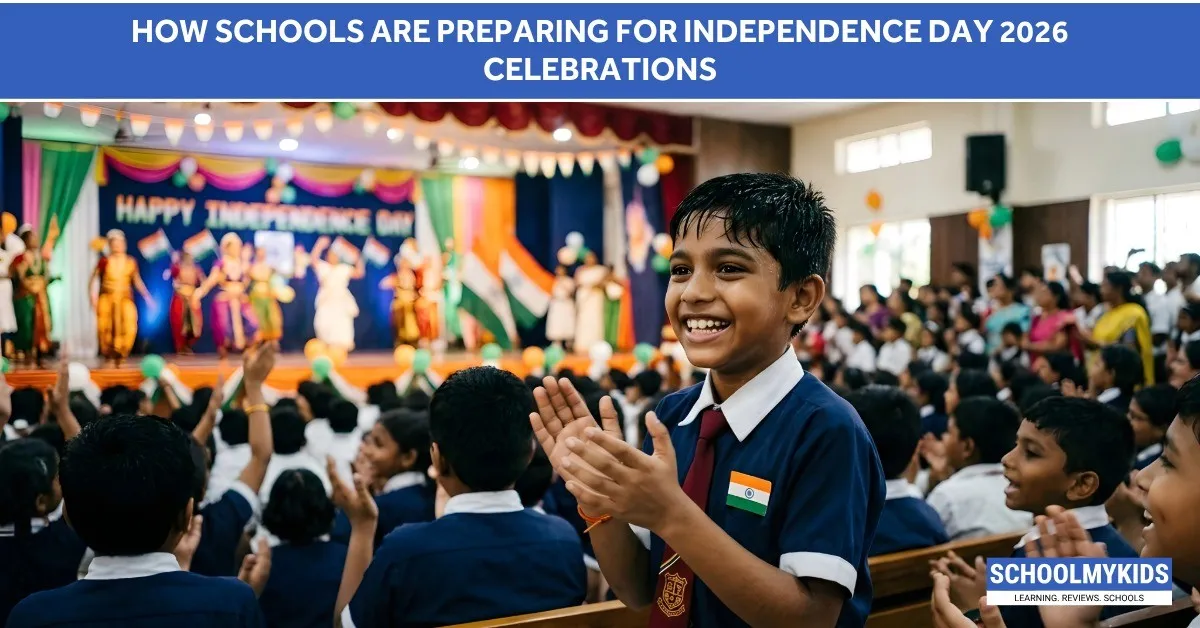
Your principal just sent a circular. It came on WhatsApp. Then email. Then printed copy pasted on the board. Independence Day preparations begin now.
This isn’t just one more assembly. August 15, 2026 is the 80th Independence Day. That number matters. Eighty years since Jawaharlal Nehru stood in the Constituent Assembly and delivered his "Tryst with Destiny" speech at midnight on 14-15 August 1947. The Red Fort in Delhi will have the Prime Minister hoisting the flag at dawn. The entire nation is watching.
Your school is part of that. And they’re actually putting effort into it this year.
What’s Actually Happening in Classrooms Right Now
Mrs. Patel, a Class 5 teacher in Mumbai, just assigned every student a freedom fighter. Bhagat Singh, Rani Lakshmi Bai, Subhas Chandra Bose, Sarojini Naidu. Each kid gets one name. They research for a week. Then they come to school in costume and give a two-minute speech about their freedom fighter.
Rajesh got Bhagat Singh. He’s stressed because he doesn’t own a turban. His father found one somehow. Now Rajesh is learning about a man who was executed at 23 years old. He’s reading actual history, not just dates from a book.
In a Delhi school, Class 7 students are painting the freedom struggle on a mural. They’re dividing the entire hallway wall into sections. Each section is a major event. 1857 uprising here. Quit India Movement there. Partition over there. By August 15, the entire wall becomes a timeline that new students walking into school will see.
That’s different from just showing a film.
The Morning of August 15
Flag hoisting happens early. Really early. Students selected to hoist the flag arrive even earlier. There’s rehearsal. You can’t just grab the flag and pull. There’s a sequence. The principal stands. The teachers stand. The flag goes up slowly. Dignity matters.
The National Anthem plays. Everyone sings. It’s mandatory. Even if you’re out of tune, you sing. Even if you’ve never sung before, you sing. Because on that morning, you’re not just a student. You’re part of something.
Then the principal gives a speech. Usually about sacrifice, freedom, and responsibility. Then student speakers go. These are kids from different grades. They talk about what Independence means to them. Some are nervous. Some sound like their parents wrote it. But it happens.
After that, cultural programs. The school has prepared for weeks. A dance group does a patriotic number. Someone recites a famous freedom fighter’s speech. A choir sings an independence song. It’s 45 minutes of standing around, watching your classmates perform. Some performances are actually good. Some are hilariously bad. Everyone laughs anyway.
What Students Are Actually Competing For
Schools announce competitions a month before. Essay writing, speech, quiz, poster making, fancy dress as freedom fighters. Students sign up thinking they’ll win prizes.
The prizes are usually things nobody wants. A notebook. A badge. Sometimes a small trophy. But students compete anyway. Because doing something is better than watching from the crowd.
Competition Type | Preparation Time | Who Usually Participates | Prize Typical |
|---|---|---|---|
Essay Writing | 1 week | Class 6-10 students | Certificate + notebook |
Speech Delivery | 2 weeks | 5-10 selected students | Trophy + recognition |
Quiz Competition | 1 week | Quick learners, good memory | Prizes for top 3 |
Fancy Dress (Freedom Fighter) | 2-3 weeks | Any interested student | Certificate + small gift |
Patriotic Song/Dance | 4 weeks | Group of 10-20 students | Recognition + performance slot |
Poster/Art Competition | 2 weeks | Art-interested students | Prize money or certificate |
Debate (India’s Progress) | 2 weeks | Confident speakers | Trophy + recognition |
The Stuff That Actually Happens But Nobody Talks About
Decoration happens days before. Volunteers (usually students) put up tricolour balloons, paper chains in orange-white-green. Someone makes a rangoli. The school looks festive, briefly.
The canteen makes special food. Kheer in patriotic colors. Orange cakes, white barfi, green cookies. It tastes weird when they overdo the food coloring, but students buy it anyway because it’s something different.
A student gets selected to lead the pledge. This pledge is important. It happens after the flag hoisting. “I solemnly pledge that I will be a citizen worthy of this great nation.” Everyone repeats it. It’s supposed to feel meaningful. For some kids it does. For others it’s just words they repeat annually.
The school distributes tricolour caps to Class 1-3. Free hats. The kids wear them proudly even though they look ridiculous. Parents take photos.
The Older Kids’ Perspective
Class 10 and 12 students already know all this. They’ve done it since Class 1. The flag hoisting, the speeches, the same decorations every year. They participate because it’s mandatory. But they’re also preparing for boards, competitive exams, college applications. Independence Day is one of the few mandatory breaks they get.
For them, Independence Day is more abstract. They learned about independence as history in Class 7. Now they think about it differently. About what independence means for their generation. About the responsibilities that come with freedom.
Some schools have Class 11-12 students give speeches about this. About what independence means beyond the historical event. About the work still being done. About India at 80 years old. Those conversations matter more than costumes do.
The Special Angle for 2026
This year's 80th Independence Day centres on Viksit Bharat 2047, the goal of a developed India by 2047. The government is pushing this idea that students are responsible for building that developed nation.
Schools are including this in their programs. Teachers tell students about indigenous technologies. About green missions. About Atmanirbhar Bharat, self-reliant India.
Some progressive schools are asking students to think about specific goals. What will India be in 2047 when today’s Class 5 kids are adults? What can they contribute? It’s more complicated than reciting freedom fighter facts. It’s thinking about the future.
Schools are also connecting with the Har Ghar Tiranga campaign that runs from 9 to 17 August 2026, encouraging students and families to display the flag and join the wider national effort.
Key Takeaways
India celebrates its 80th Independence Day on August 15, 2026, marking 80 years since independence from British rule in 1947
Independence Day 2026 focus centres on Viksit Bharat 2047, highlighting indigenous technologies, green transition and self-reliance
Schools prepare through early morning flag hoisting ceremonies, National Anthem singing, cultural programs, and student competitions
Student competitions include essay writing, speeches, quizzes, fancy dress, poster making, and debates, typically with participation across multiple grades
Flag hoisting ceremony involves rehearsed sequences, student speakers, and cultural performances lasting approximately 45 minutes
Decorations include tricolour balloons, paper chains, rangoli, and thematic food arrangements in school canteens
Class 1-3 students receive tricolour caps, while older students focus on speeches addressing independence’s contemporary significance
August 15, 2026 falls on a Saturday. Many schools hold flag-hoisting and programmes on the day itself or shift timings around the long weekend
Digital India Bhashini (AI-based translator) is set to translate the Prime Minister's speech in real time into over 22 Indian languages
Red Fort ceremony includes 21-gun salute and special invitations for grassroots workers, women achievers, and youth leaders
Frequently Asked Questions About School Independence Day Celebrations
Do I have to participate in competitions if I don’t want to?
Technically no, but teachers often strongly encourage participation. Even if you don’t win, participating is usually considered part of the school culture on that day.
What if I don’t know how to speak in public for the speech competition?
First-time speakers are usually paired with guidance from teachers. Practice a few times, and it becomes easier. Many schools prefer genuine effort over polished performance.
Why so much focus on decorations and prizes if it’s about history?
Schools believe making the day colorful and celebratory helps the history feel real to younger kids. Plus, it’s one of the few days the school looks different from the regular routine.
Can I choose my own freedom fighter instead of the one assigned?
Ask your teacher. Some teachers are flexible if you have a genuine interest in someone else. But most stick to the assignment to ensure variety.
Will this celebration affect my grades?
Participation is usually part of your periodic assessment or class activity marks. It won’t drastically affect your overall grades, but it’s noted as part of your engagement.


Be the first one to comment on this story.